
This post may not say what you are expecting it to say.
If you are predicting it will proffer that if a charity involves volunteers in its organisation then its for all leadership roles, including and particularly CEOs, to show they take a share of responsibility for managing volunteers even if they are not doing it directly day to day. This is not the point I am going to make.
Yes, it is 100% true CEOs should be taking overall responsibility for ensuring volunteers are properly recruited, onboarded, trained, supported and recognised and rewarded. It also then follows that the CEO should not be simply delegating the entire volunteer management responsibility to a volunteer manager/coordinator.
However, the point I wish to highlight is that there are volunteers within charities that ONLY the CEO has responsibility for.
ALL charity CEOs are actually volunteer managers, not indirectly, but they have a direct responsibility for managing a group of volunteers.
CEOs have a direct responsibility to support trustees who volunteer their time to govern and take legal responsibility for the charity. Most charity CEOs, nor boards for that matter, may not think about it in these terms, as it is quite an unusual volunteer management arrangement as the volunteers the CEO manages are also, collectively, their boss.
Trustees are volunteers and for a charity to have a well functioning board, the CEO needs to do all the things that good volunteer managers do, for example:
(i) Inclusive and open recruitment for trustees
(ii) Clear description of the trustee role including responsibilities and expectations (e.g. time commitments)
(ii) Thorough and structured induction to be able to carry out their volunteer trustee role
(iii) Ongoing training and development
(iv) Ongoing support and communication (shared with Chair of trustees)
(v) Provide detailed information they need to do their role sent in a timely manner (e.g. board papers)
(vi) Recognition of the time and contribution the trustee has given
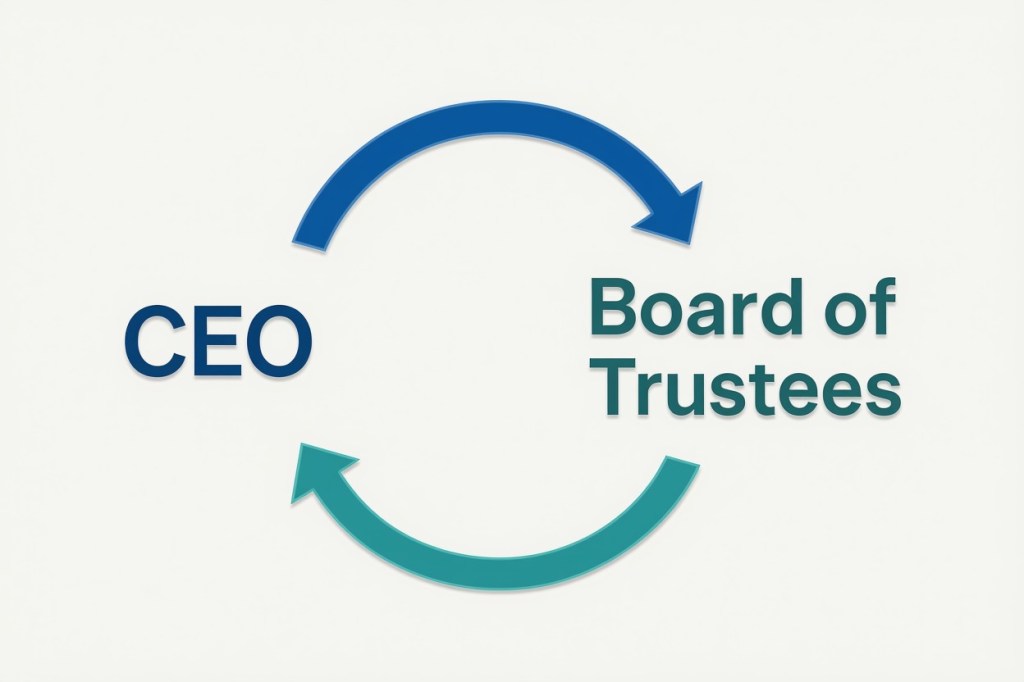
It might seem contradictory or confusing to suggest that a CEO is managing a group of volunteers who manage the CEO. Some trustee boards may not like the perspective of them being ‘managed’ as they are ultimately the boss, taking legal responsibility for the charity.
However, both things can be true and I would argue both need to be happening for a high performing board. The CEO needs to manage and coordinate well the trustees as volunteers, giving them all the support they need so that the board can be effective in its legal duty to govern a charity, setting its strategic direction, and ensuring it runs in line with its core purpose.
So, if your organisation is having difficulty recruiting trustees and/or has a high turnover of trustees or the trustees are not as engaged or performing as well as they need to be then perhaps the CEO should be learning from volunteer managers?

