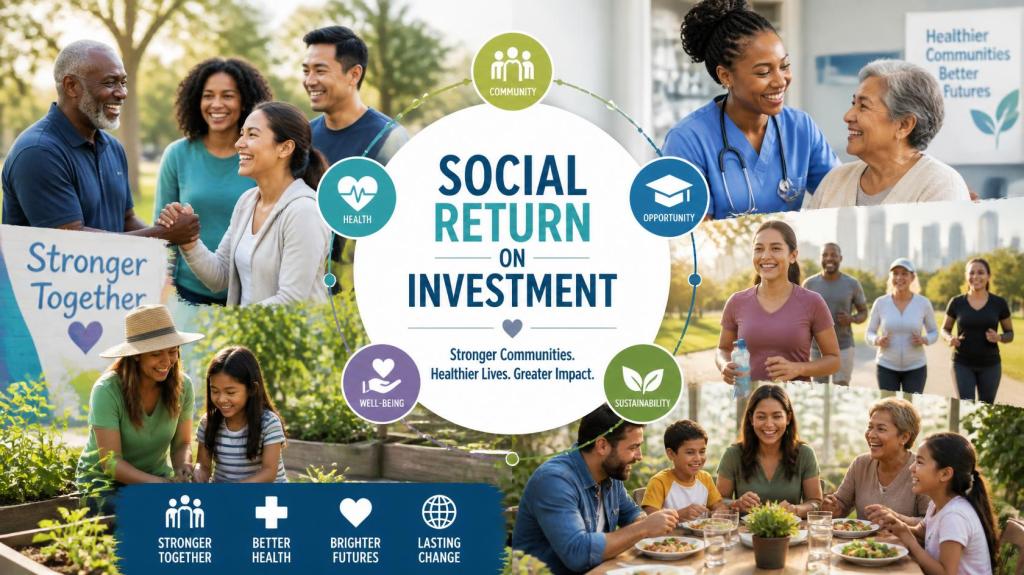
I won’t beat about the bush, the Social Return on Investment (SROI) case for the NHS investing in volunteering is huge.
Any NHS Neighbourhood or system that is serious about prevention or social isolation, to name just two examples, should be investing in volunteering, for two compelling reasons:
1) the returns are massive, long-term and sustainable
2) the investment is small and will most likely mean adding to investment already taking place (i.e. local authorities)
I am the operational lead for the Volunteering Together 4 Health partnership which is a brilliant group of volunteering infrastructure experts working to strategically develop health volunteering in North Central London (& beyond). This week we produced a good practice guide for involving volunteering in NHS Neighbourhoods.
The document, I hope, makes a strong case why volunteering needs to be invested in as a cross-cutting strategic asset, rather than simply as an add-on mechanism to support the delivery of health and care. This is partly because the act of volunteering, even if nothing to do with the NHS or healthcare, brings health benefits to the person who volunteers.
Although volunteering benefits people of all ages, studies suggest that the greatest health impact of volunteering is for older people. This is very relevant for the UK which has an ageing population. A ten-year UK household longitudinal study concluded in 2022, ‘that participating in volunteering is associated with higher levels of health-related quality of life and that the association can be found across neighbourhoods, regardless of deprivation. … It is particularly encouraging that older volunteers are experiencing the positive impacts through volunteering as this suggests that promoting volunteer work to older adults could help the UK population to age healthily.’
Therefore, increasing levels of volunteering in a NHS Neighbourhood, and indeed across a whole system, will help provide significant long-term sustainable health outcomes, regardless of future health priorities and focus.
More socially active communities are more cohesive and resilient, but also create clear demonstrable physical and mental health impacts that support health and wellbeing:
- Reduce social isolation/loneliness
- Lower blood pressure
- Reduced stress and cortisol
- Reduced depression
- Sharper brain function and slower cognitive decline
- Increased physical activity
- Better self-reported physical health
The cost of social isolation
The cost and impact of social isolation/loneliness on the NHS is significant and strategic approaches (i.e. prevention) to reducing this, e.g. volunteering, will both create savings and free up capacity for the NHS. A recent study by the University of Exeter, using data from over 23,000 adults, concluded that loneliness leads to an extra cost to the NHS of £850 per person per year.
Strategic alignment of volunteering investment
The great news for the NHS is that the majority of Councils already invest in volunteering infrastructure in some way although it must be stressed expenditure in this area has been significantly squeezed due to long-term pressure on local authority budgets. This creates an opportunity for Neighbourhoods, and health systems more generally, to align their strategic investment in volunteering with local authorities to help achieve objectives and priorities.
Our best practice guide describes why volunteering needs to be prioritised in NHS Neighbourhoods, with recommendations of:
1 – Take a strategic approach to volunteering
2 – Engage VCSE Partners using good practice approach
3 – Investment in Volunteering (Strategic Alignment with Local Authorities)
4 – Volunteering is an enabler for a wide range of health priorities
5 – Importance of flexible volunteering
6 – Establish or support an infrastructure for health volunteering
7 – Keep volunteering voluntary
8 – Importance of Volunteer Management
9 – Be open to innovation and trialling new approaches
There are obvious huge wins for both the NHS and local authorities if they can strategically align and combine investment in volunteering. Even small increases in volunteering will help save costs, short and long term, for both whilst supporting communities and having a strong voluntary and community sector.
But will they do it???

