
Doing jury service is not volunteering but it is considered civic duty so I hope you do not mind a slight deviation from my normal posts.
I recently carried out jury service (Feb 2026) and before I did I looked online to try and find out more about what it is like and found surprisingly little information so I am sharing my experience in case it is of help to others who are about to do it or are just generally interested to know what it is like.
Although approximately 180,000 people a year carry out jury service in the UK, which is like the entire population of Swindon or Milton Keynes doing it, there is very little information out there in the internet-AI-o-sphere on what it is really like and what actually happens? Now some of this is because you are legally not allowed to talk about the trial when it is happening and then you are NEVER allowed to talk about what is said during the jury deliberation. However, there is no reason why more information cannot be shared about going to court, the selection process, the facilities, expenses, the space where you wait, security, how to spend your time etc.
“Rather than being 12 angry men my experience was more 12 jolly souls!”
Overall, I really found my experience doing jury service very interesting and if summoned again, and available, I would happily do so again. However, my experience ended up being a bit anti-climatic, as I will explain further below, and also rather than being 12 angry men my experience was more 12 jolly souls!
Jury Summons
I received my jury summons by post in the middle of December to attend the following February. The letter stated the date my jury service would start and underneath it says, ‘Jury service usually lasts for up to 10 workling days, but can be longer.‘ Who gets called up is random based on people on the electoral register. My jury summons letter had the parliamentary constituency I live in stated on the address.
The letter also says you must reply within 7 days of receiving the summons (online or return form by post) and a Warning! ‘If you do not reply to this summons or do not go to court to do your jury service without reasonable cause, you may be committing a criminal offence and you could be fined up to £1,000‘
Although as a younger man I was super keen and interested in serving on a jury, my first thought and action on receiving this summons was to see what the valid reasons are to get out of it? Not because I was not interested, but just that I have a very busy, some might say ridiculous, life and it is not particularly convenient to take out 2 weeks from my normal activities.
I first spoke to my Dad as he had done jury service some time ago and wanted to know more about his experience. The first thing he said was that there is a lot of hanging around, waiting to be called into court. Pretty much everyone I spoke to about jury service said something similar, e.g. “make sure you bring a good book!“.
I also posted on Facebook to ask if any of my friends had done it and if they had any suggestions or recommendations. Comments included:
‘When I finally got called I found the process fascinating.’
‘Take a good book, there is a lot of hanging around. Try and keep an open mind, but focus on the evidence. If you get to be the jury foreman try and get everyone to speak up in the discussion and respect that they may have different conclusion to yours no matter how outlandish in the face of the evidence it is.’
‘I’ve done it twice … very costly… if you are a contractor. Advice? If you believe something, dont give up. Dont go back to the judge with questions once you start deliberating, the Jury is the boss. … dont break the law – its tempting but no outside discussion, no google or other research.‘
‘Just did it. 8 days off work, during which I spent no more than 5 hours in court hearing evidence. Magnificent. Rest of it was in various cafés and ‘Spoons.’
‘Take lots and lots of books to read while waiting…..‘
Some others got in touch privately to share their experience as they did not want to say it publicly. No one recommended I should not do it, but some people noticed a lack of diversity on their jury. Some mentioned the WiFi being so bad they abandoned it and also being in a room all day with windows you cannot open gave them a headache. Many mentioned about how it was good to be able to do your civic duty and recognising that this is part of living in a democratic nation.
This all helped convince me that I should definitely say yes and I quickly remembered all the reasons why I was interested in doing it years ago. 12 Angry Men is one of my favourite films and Henry Fonda as juror no.8 is one of my favourite film characters.
There are not many reasons to get out of doing jury duty but it is more possible to defer it. I thought about this but could not think of a better time to do it as any time is going to be inconvenient! You can defer 2 times but on your third time, so I was told by other jurors on their third deferment, you need to provide 3 sets of 2 weeks you can do and then you have to do the one they select.
After sending back the form to say I will attend, I was sent further information by email and post confirming my acceptance to attend. This information is important to read as they will tell you which court to attend, what time and what you need to bring. I live in the wonderful Buckinghamshire town of Amersham at the end of the Metropolitan line and was asked to attend Aylesbury Crown Court (about 35mins drive). However, they also mentioned that I might be asked to serve at the Amersham Law Courts. For convenience I was obviously hoping for the latter and so I was very pleased to receive the email the Friday before the Monday I was due to start that I was to report to the Amersham Courts.
I discovered that Amersham is a satellite court of Aylesbury Crown Court where they have courts numbered 1-3 and Amersham has courts 4 and 5.
The information about jury service sent through the post says juries hear the most serious cases – theft, burglary and drugs offences… murder and rape, but the last two are less common.
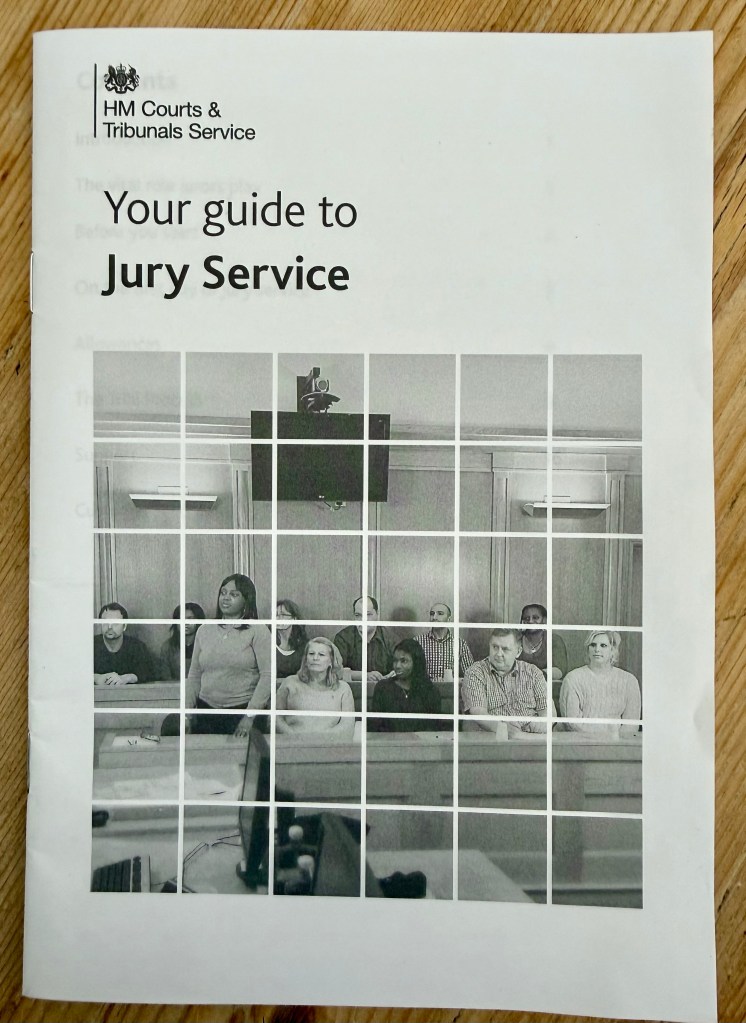
You are given a juror reference number (9 digits) which you will need to hang onto for your first day in court and for claiming expenses.
Information is also sent by email, if you provided an email address when you accepted the jury summons, which also contains useful information and reminders your service is coming up soon. The email also links to an official video on YouTube about being a juror:
This is a helpful video but note the section about being challenged as a potential juror is out of date as they eliminate a lot of this before you are called to court. The only things that may prevent you serving is covered in the ‘JURY SELECTION” section below.
If you look through the comments on the video you will see lots of people are nervous and anxious about having to do jury duty. This is something to be aware of and considerate of when you spend time with your fellow jurors and specifically during the deliberation process.

First Day at Court
I was asked to bring:
– Photo ID (Driving Licence or Passport)
– Jury Summons Letter
When you arrive on your first day as, well as normal security bag checks, they will ask to see your ID to check if you are the right person and that your ID matches the address on your jury summons. I was asked to show my ID a second time, a short time later, in the jury assembly room by the usher but after that I was never asked for ID but was told to have it with me each day as they can ask to see it at any time.
After going through security I was escorted to the jury assembly room which was in an area only accessible by a security swipe card operated by security. The room itself was a thin rectangular shaped room with a total of 23 chairs squeezed together covering each side, each fitted with a small swivel desk. About 7 or so jurors had arrived before me and I picked a free chair that had a form on the desk part of the chair.
The usher, wearing her legal robes, went round the room checking everyone’s ID and asking people to complete the second half of the first page of the form (shown above). The second half of the form covers your emergency contact and to state if you have any appointments they need to be aware of, e.g. medical appointment, job interview etc. We were then asked to tear off the second half of the page and hand it to the usher. The paper is not perforated so some of us were better than others at neatly tearing the paper. I was not so good at this and jealous that others had clearly developed a skill I did not know I needed! 🙂
A total of 16 people arrived for jury duty that morning, 11 men and 5 women. The youngest was about 30 years old going right up to several people of retirement age. Everyone is friendly but mostly quiet without much chatter and they seem a little nervous about what is going to happen.
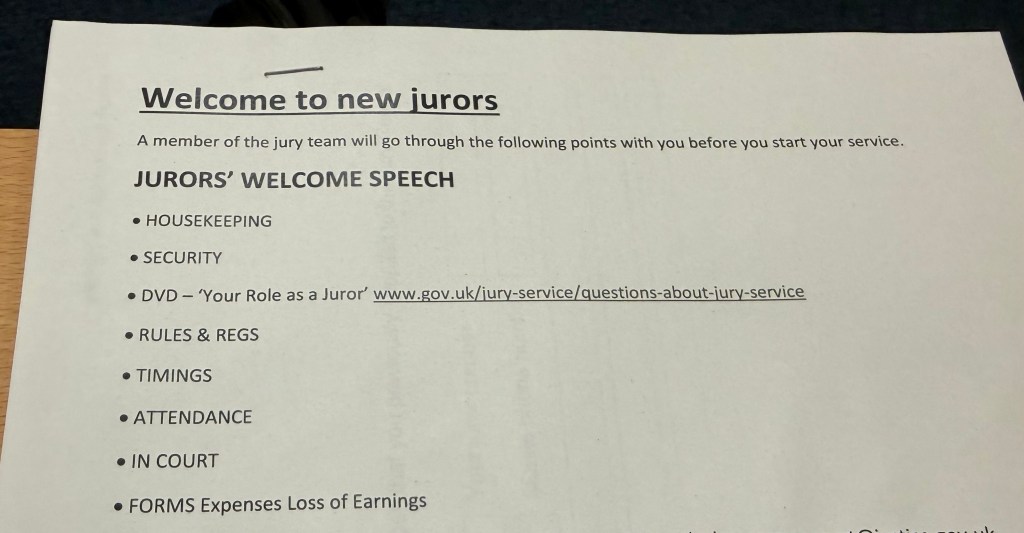
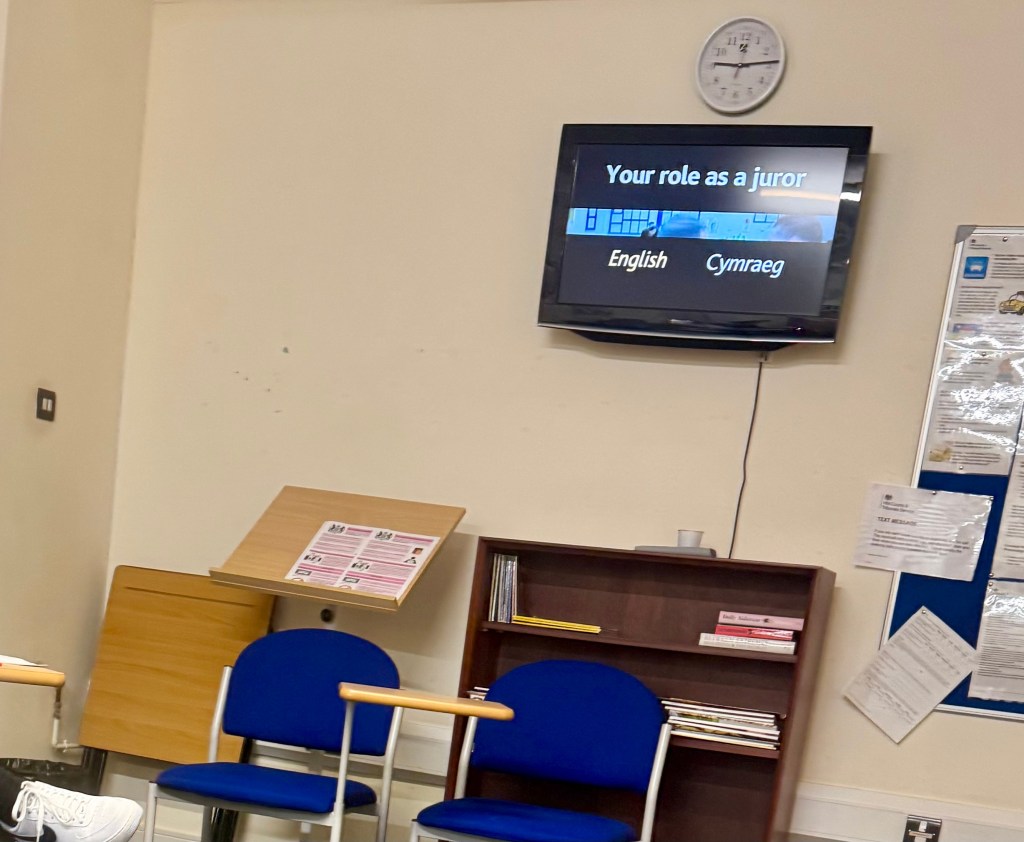
With all jurors in the room who were expected to be there, the usher went through the welcome and induction (see list of topics in image above) which includes watching a DVD. This is the same video on YouTube I had already seen.
The usher also told us that although the public are allowed to attend court trials your family and friends cannot come into the court you are sitting at as a juror.
EXPENSES
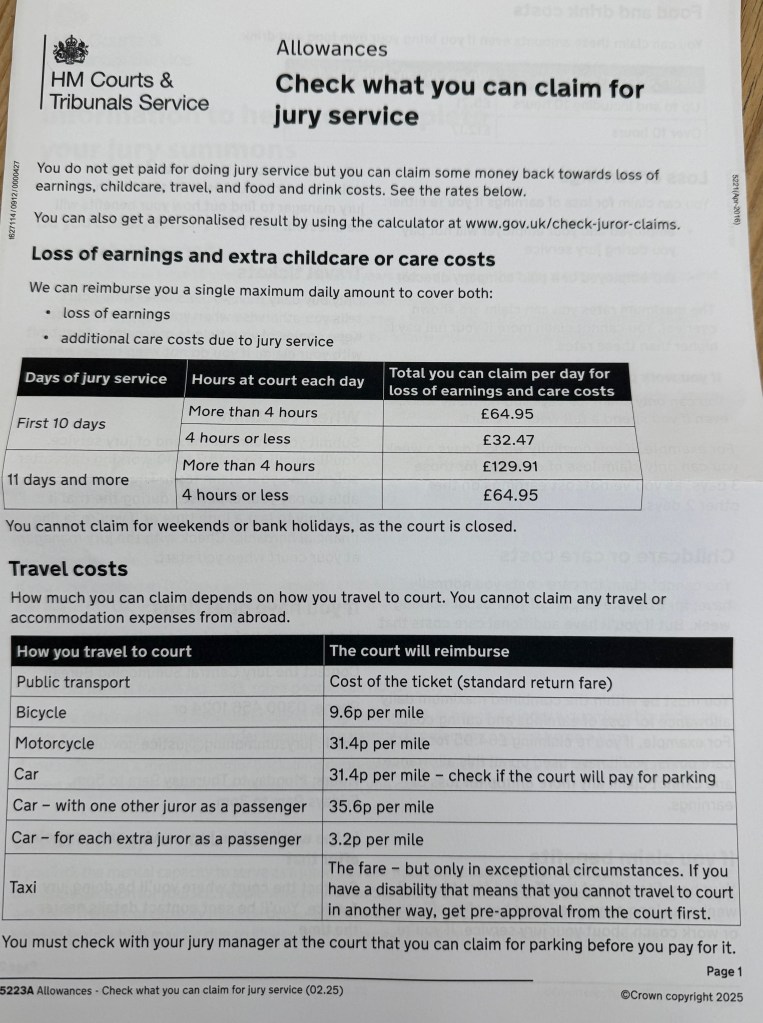
The usher then explained the expenses process and this caused the most number of questions from our group, not because she explained it poorly but just that the courts are quite specific (read mean) in what you can or cannot claim for. The rules for this may vary slightly for each court so listen carefully to the usher and/or contact the courts before you attend for the first day to understand what you are eligible to claim for.
For example, claiming for car mileage and parking has specific rules. Our group were told that you can claim for mileage (31.4p per mile) but could not claim for parking if you could get to the court using public transport within 1hr and 30mins. The usher suggested using the traveline website to check the time it takes to get somewhere using public transport (https://www.traveline.info/). Even if you are eligible to claim for parking they have a limit (£4.10 per day) and also suggested using the Sycamore Road Car Park in Amersham, 7mins walk approx., as it is the cheapest, but still more than they compensate, compared to the multi-storey car park which is less than a minute away.
There is a standard set subsistence allowance, £5.71 per day (up to and including 10hrs and £12.17 per day for over 10hrs) so you do not need to provide receipts. You need to make your claim after the jury service has ended.
FACILITIES – Tea/Coffee/Toilets
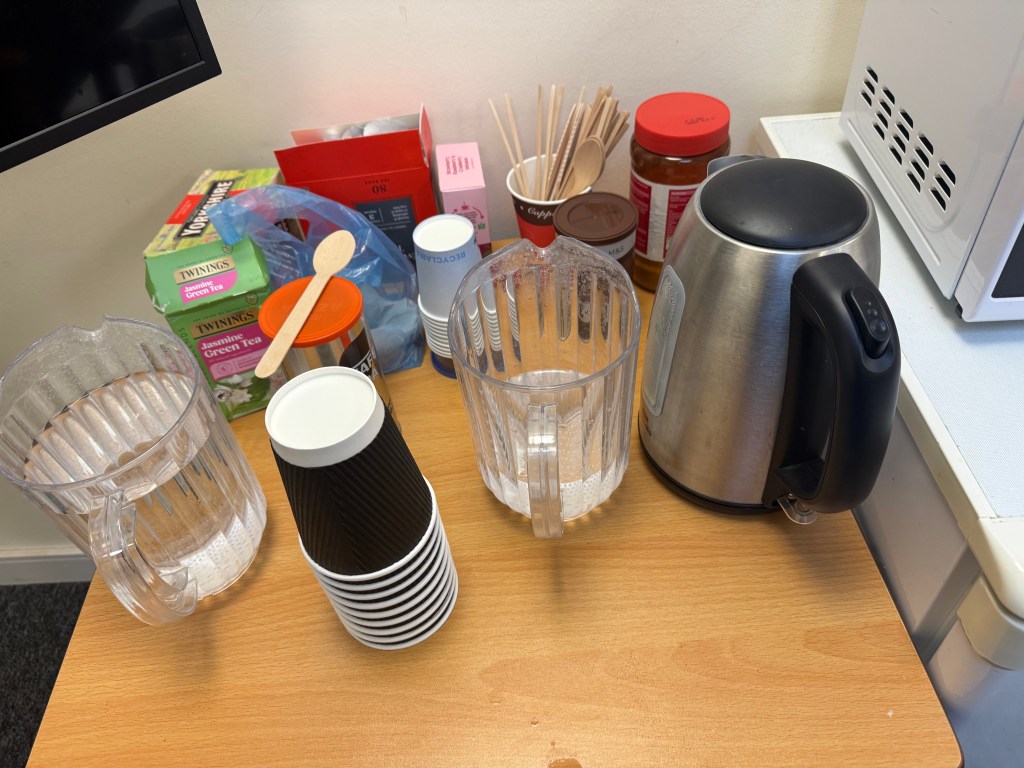
As a small court the facilities available to us were very limited. There was a kettle, some water in jugs, a microwave and a fridge. There was some tea and coffee but this was leftover from previous jurors who had brought it. The court did not provide any tea or coffee. In larger courts I do not think there is much more available and you may find some vending machines but not much more.
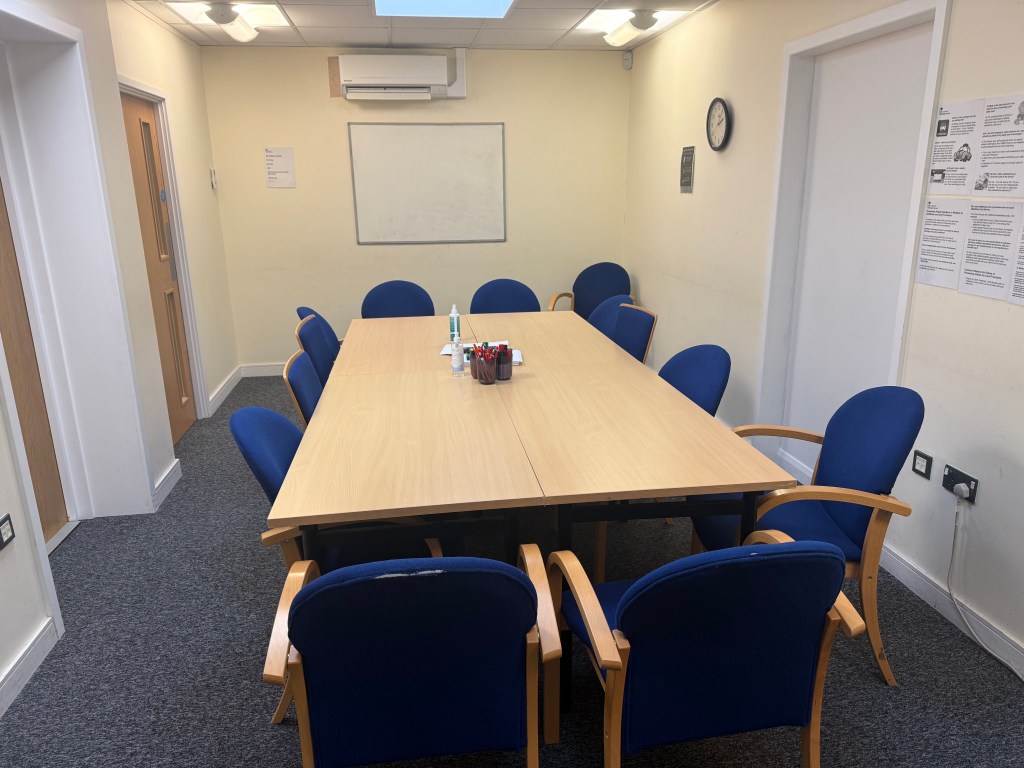
There were toilets (men and women) in the secure area just before you enter the jury assembly room. Inside the jury assembly room were two doors, each leading to a jury deliberation room and each connected by a short corridor with 12 small lockers (3 sets of 4) and toilets (men and women).
For the first week our group of jurors had sole use of the assembly room and the two deliberation rooms but in the second week we were essentially confined to wait, as there were more jurors for other cases, in one deliberation room and adjoining toilets. The deliberation room we used had a door that connected directly to the court via a short hallway.
What you can bring to jury service
I fully recommend bringing whatever you feel you need to productively or serenely pass the time whilst you wait. Things to consider:
(i) The lockers they provide may be too small for a reasonable size rucksack but also know you will be waiting in a fairly secure area that can only be accessed by other jurors and court staff (security, ushers).
(ii) the lockers we could use required a pound coin to operate. The first couple of times I forgot the pound drops down when you unlock the locker.
(iii) you cannot bring any metal or glass with you. One of my fellow jurors brought metal cutlery for their lunch on their first day and had it confiscated by security and she had to pick it up when she left for the day.
(iv) Sandwich bags if you do not already have them.
I brought with me each day the following, but please note I brought more than most people did:
– Laptop
– Phone
– Lunchbox
– Bottle of water
– Magazine
– Books x 3
– Earphones
– Powerbank and cable
– Pound coin x 2
– ID (Driver’s Licence)
The Jury Experience (During a Trial)
JURY SELECTION
Receiving a jury summons and going to court does not actually mean you will carry out any jury service. It makes sense they get more people than they need to allow for any conflicts, people being sick or other issues arising. Approximately twice as many people receive a summons than actually serve each year.
In my group the 16 of us, referred to by the usher as a jury panel, were taken into the court room with all the key people present: the judge, the defendants, all legal representatives and court staff. We are told to stand in line and for the court in Amersham we needed to make an L-shaped line so we could fit. The judge then introduces each of the key people in the court to ask if any of the jury panel knows them. We are told to raise our hand if we do. A list of witnesses and relevant case places/locations is then read out, again to see if any of the jurors knows them. For example, if a pub is significant in the case and a juror is a regular there then that would likely disqualify them from serving for that particular trial.
After any jurors are dismissed for any connections to the case the court then selects the 12 jurors who will serve on the trial. The court clerk has a card for each of the potential jurors, shuffles them and picks one randomly at a time. The first person’s name is read out and the person responds ‘yes’ and they become Juror No.1 and they go to sit in the allocated spot in the jury box. The next person’s name is read out and they become juror no.2 and so on.
In my case eleven people had been selected and with a remaining one in six chance of being selected I thought I would probably not actually serve. However, my name was read out and I became juror no.12 and took the final allocated spot in the jury box. These allocated spaces are set for the duration of the trial and so I always sat in the juror no.12 seat.
The remaining unselected jurors are then asked to stand at the back of the court. Each of the jurors, in turn, then makes an oath and can choose to make a religious one or an affirmation, which is an oath without any god being mentioned. The unselected jurors are then asked to leave.
The jury box was split into two rows of 6, with jurors 1 to 6 sitting at the front with 1 nearest the judge, and jurors 7 to 12 sitting at the back, with juror 7 behind juror 1, on a higher level so they can see everything just as well. The seats we had were just a basic fixed-in-position chair, all quite close together, with a seat that flips up when finished, so the other jurors can get out. In front of us is a narrow desk, about as a deep as the short edge of an A4 piece of paper, that runs along the entire bench for the 6 jurors. At the back of the desk is a small raised part which has small jug of water and some cups, a pencil sitting upright in a pencil sharpener and on each row are 3 monitors for the jury to look at relevant video and photos. On the desk is a folder with some blank paper in it and a pink booklet about your responsibilities as a juror:
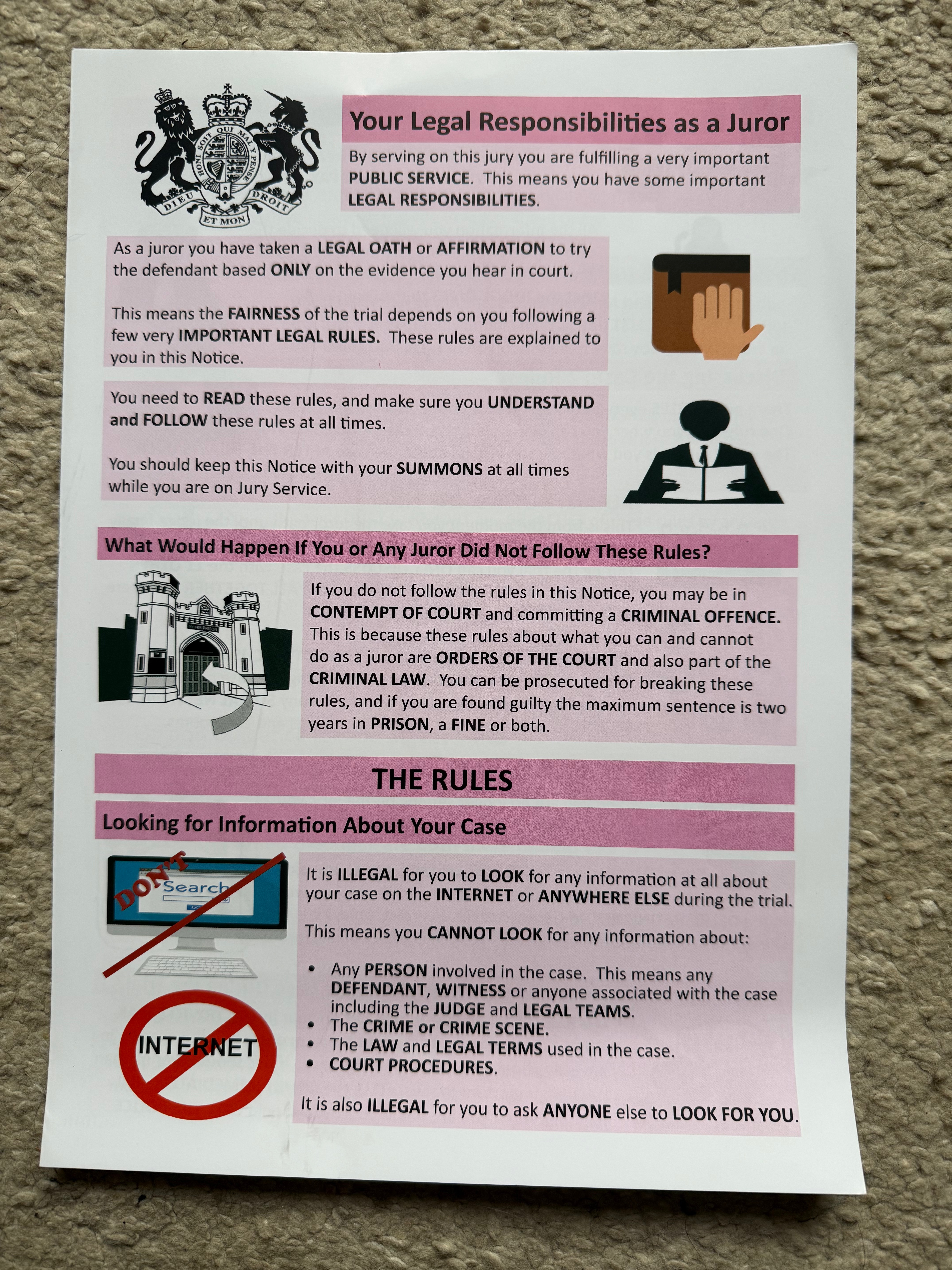
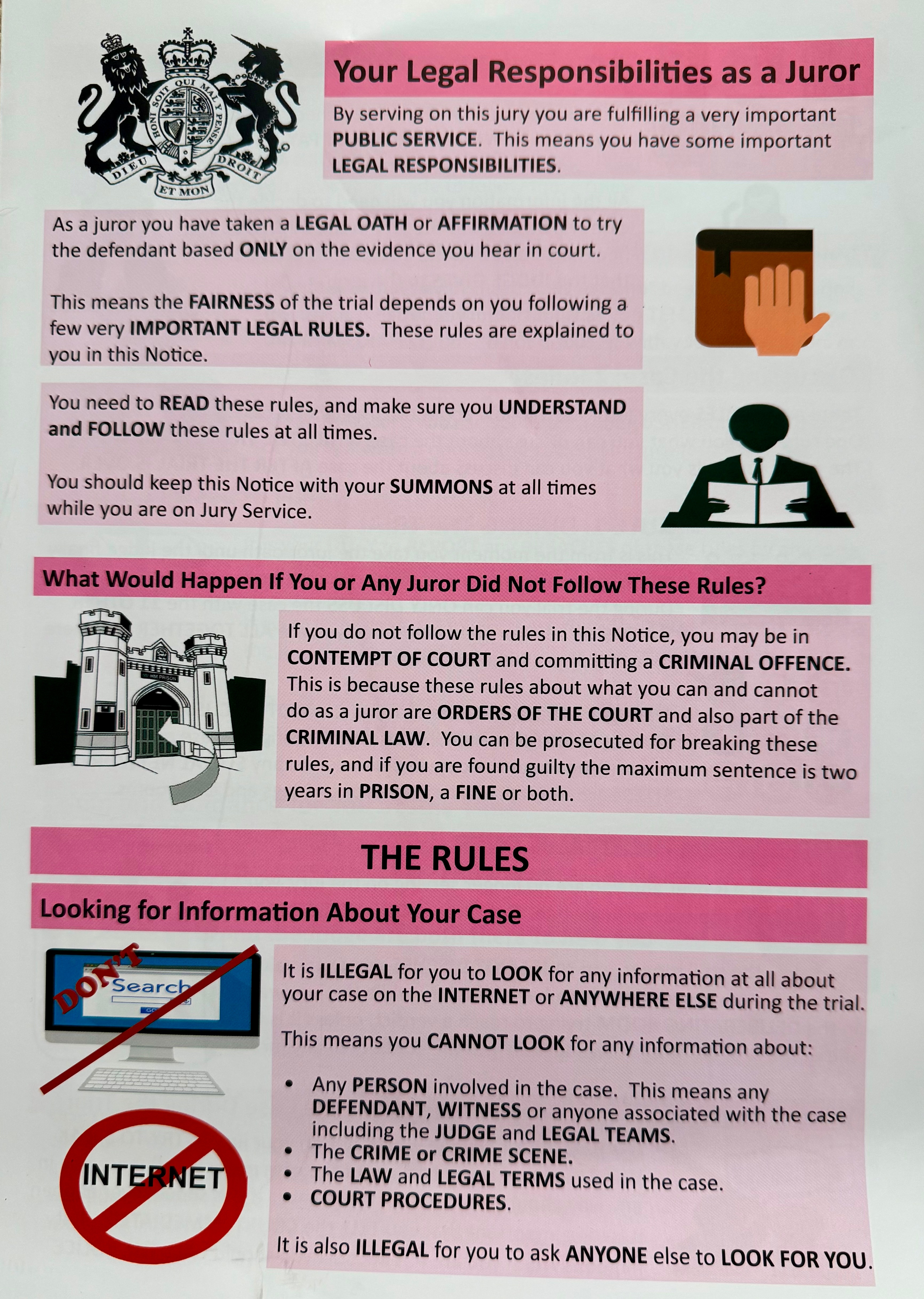
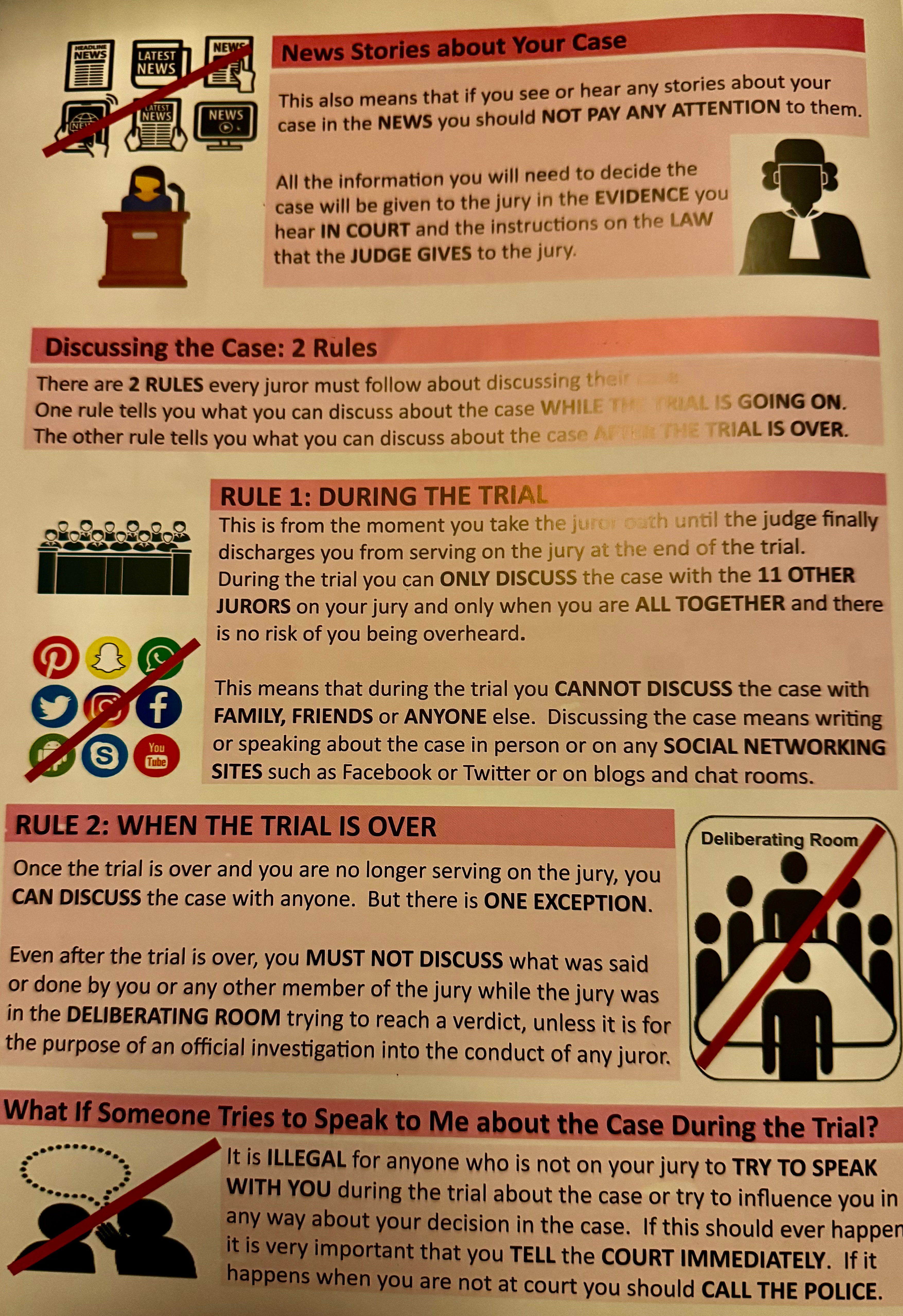
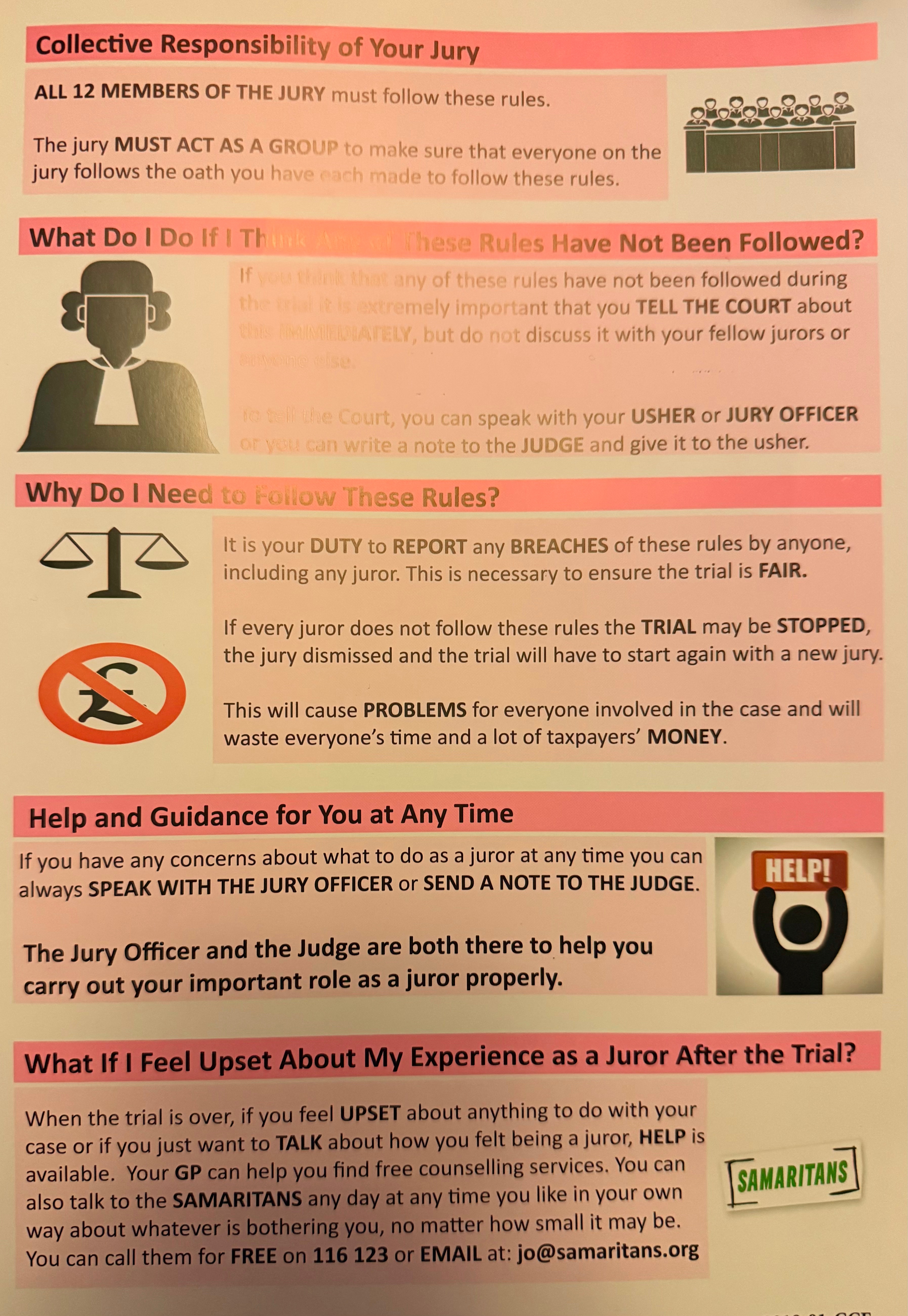
From my position as juror no.12 I could see around the room, going left to right:
– the public gallery (90 degrees to my left) with 13 seats, 8 at the back and 5 at the front and a gap for people to enter
– the main entrance to the courtroom
– the dock: an L-shaped area protected by glass in the corner of the court with 3 seats on one part of the L and about 5 seats on the other. The four defendants of my case were sitting there and at least 3 or 4 security people. There is also a door that leads to toilets and other rooms but you cannot see much.
– 4 rows of benches in the middle of the court facing the judge, each can accommodate about 4-5 people, for the legal representatives. The prosecutor and their colleague are on the front row at the far end from the jury.
– In-between the legal representatives and the judge are the clerk and usher(s).
– The judge sits higher up than everyone to see everything that is going on.
WIGS
Yes, all the legal representatives and judge wear wigs whilst in court. Even though you may be very aware of this already, it is still unusual to see for the first time so many people going about such serious work wearing wigs. You cannot help but wonder how annoying this must be? Don’t they itch? Do they worry about them falling off? etc. The judge at one point noted the room was hot and is even hotter when wearing a wig.
TECHNOLOGY
Each of the four defendants had legal representation, plus the prosecuting barrister meant 5 different people needing to use technology to show video clips and images. Barristers are not any better at doing this than the rest of us and there were some almost comical moments where they had to help each other to sort out issues of sharing their screens.
THE JUDGE
I realised I am getting old because my first thought on seeing the judge was, ‘he looks young?’! The judge we had was a very nice chap who was very polite, empathetic and thankful to all the jurors for giving their time to carry out this duty. Although he was very polite and respectful he will still quite firm and strict about things he needed to be firm and strict about. He told us we MUST NOT:
(i) Research the case in any way – although it will be very tempting to do a quick, seemingly harmless internet search on the defendant(s), the judge, the barristers, witnesses, but you just cannot do this. Although you may be tempted to do this out of keenness and interest of wanting to do a good job as a juror, you must not do this and the judge makes it clear you could get a fine and/or a prison sentence for doing so. You must come to any verdict using ONLY the information you are given in court.
(ii) Talk about the trial when it is in progress – the judge said to us that when you get home your family and friends will ask about what happened and you cannot say anything. He said to blame him that the judge has told you that you must not discuss the trial whilst it is happening. This may seem odd as members of the public can attend but the integrity of the trial process is compromised if other people talk to you about it and potentially, even if inadvertently, influence your thoughts about the case. The ONLY people you can discuss the case with, the judge tells us, are the other jurors and ONLY when all twelve of us are present.
(iii) NEVER reveal any of the discussions, comments, votes of the jury deliberation process – What happens during jury deliberation forever stays in jury deliberation.
These are not guidelines, but very strict rules you MUST follow and if you do not you could get yourself a fine and/or time in prison as well as causing the trial to have be run all over again which is both traumatic and costly for all those involved.
TIMINGS
The typical court day runs from 10am to 4pm with a lunch break from 1pm to 2pm. However, this is a guideline and not a fixed rule … far from it. When I served, we never started at 10am and also never finished at exactly 4pm. The latest we finished was 4.30pm and most days we were told to be ready to go into court at 10.30am although we very rarely did go in at this time.
SECURITY
Every day you go to court you will need to pass through security, which will include a metal detector and having your bags inspected. I brought in a rucksack each day and the security guy said to me on the first day, “I don’t like big bags!”. I then proceeded to take in the same bag to the same guy each day and had to open up my laptop, open up my packed lunch, glasses case and take a swig of my bottled water to prove it was nothing dodgy. Security also asked me, on the first day only, if I had any deodorant which I thought was odd as not something I would normally carry with me, but aerosol cans are not allowed. Being friendly with these guys definitely helps with this process. All the people I met who work at the court were all very nice and helpful.
LUNCH
You will be able to leave the court at lunchtime and most jurors take this opportunity to get some fresh air and to stretch their legs. However, I brought a packed lunch and, for me, it was a good time to check emails and do other work. Avoid bringing in any smelly food as with no openable windows you will just stink out the room for everyone and make yourself very unpopular.
SEEING DEFENDANTS & LEGAL PEOPLE OUTSIDE OF COURT
When you arrive and depart the court it is very likely you may see a defendant and/or legal representatives of the people involved in the trial. This may feel a bit weird and awkward but it is important you do not have any contact with them.
On one occasion a defendant left the court just ahead of me and so I took a different route just to avoid any contact. Another day I left the court and went to Amersham high street to buy a couple of things and came back to the multi-storey car park on a wet and rapidly getting dark February late afternoon. As I approached the pedestrian entrance there was a lady in front of me saying “see you tomorrow” to someone and I realised this was the prosecution barrister. I slowed down so I entered a short time after her rather than just behind. I followed her up the stairs and hoped she wasn’t parked on the same level as me, but she was! I hung back a flight of stairs but in my hooded raincoat probably appeared quite dodgy. I exited the staircase into the carpark and was glad I had parked close to the doors so she would (hopefully) realise I was not a weirdo and was just trying to avoid any contact!
If you are approached by someone about the case just say you cannot speak to them and then report it to the usher or security if it is a more serious transgression. The courts take this super seriously so you must do too.
GOING INTO COURT
The usher will give you notice that you will be going into court shorty, but be aware ‘jury minutes’ are often a lot longer than standard minutes. You eagerly put your stuff in your locker , use the loo and then ‘hurry up and wait’ before actually getting called in. The usher comes in and asks you to stand up and line up in your order of your jury number, from 1 to 12. This was easy for me as I was no.12 and so was at the back.
As a group you may nervously have friendly or even jokey chatter whilst waiting and this is quite a juxtaposition from when you enter the very sober and serious court room. Everyone in the court is waiting for the jury to arrive as they cannot continue until you are all sitting comfortably.
WHAT IF YOU NEED THE TOILET?
The judge explains that if a juror needs the toilet whilst in court this is perfectly normal and not to worry. The process for this is you write that you need this on a bit of paper and hold it in the air for the attention of usher or clerk. This will then be collected and passed to the judge. The judge will then at the soonest appropriate moment, which may still be a few minutes, pause proceedings to enable you to go to the loo. However, be aware the whole trial needs to stop whilst you do this and all twelve jurors need to exit the court at the same time.
If you need the toilet, do not wait until you are bursting, get your note written and hold it in the air.
My Experience
After being selected as juror no.12 on a Monday we were told that the trial would take approximately 7 days.
When the trial begins the prosecutor outlines the details of the case and she explained there was CCTV footage showing the defendants were involved in stabbing someone in a Buckinghamshire town several years ago. I was shocked that the incident took place so long ago and as the defendants were young men I thought this was potentially a long time to have this hanging over them.
We are shown the CCTV footage of the incident which has been compiled together by the police and appears to show one group of guys arriving in a taxi and one guy getting out and putting a knife in his back pocket. He goes to meet someone, then others join, there is a chat and then a fight breaks out but its mostly obscured by a van and you can only see the occasional blurry head, flying arms etc and then some people running away. However, the footage looks quite condemning.
The jury were asked to leave the room for a moment and as a group we discuss what we have seen. One juror thinks he has the whole situation figured out but I say the defendants have pleaded not guilty and so it is likely that this is just episode one in a long TV series. On reflection this was actually a good analogy to use. As a juror you need to keep an open mind as you will receive different bits of information and evidence like a long TV series that has twists and reveals. You cannot reach any conclusions until you have seen every episode.
This does not stop or prevent jurors from guessing what the complete story is going to be. As long as jurors have not 100% made up their mind before all the information is given then you need to be patient that others will try to skip ahead. I believe this is just their way of dealing with the situation, particularly as we are less tolerant of being drip-fed information. We live in an increasingly on-demand culture and as a juror you only get the information when they choose to broadcast it to you. You cannot binge-watch all the testimony, but you would like to.
Whilst not in court, I tried to use my time productively as I could so I was on my laptop working most of the time. I run three not-for-profit organisations and so I just wanted to keep on top of emails and any urgent things needing doing as there are always things to do, even if its just having to authorise payments. I even managed to submit a small funding application.
It was difficult, however, to plan to go to any meetings. One day I wanted to attend an online meeting at 4pm and could be a few minutes late but that happened to be the day we finished in court at 4.30pm. I rushed out of court, grabbed my laptop and went and sat in an office room off the jury assembly room. I had not asked permission but the usher and security seemed fine with this, but they did interrupt me to check if I was going to be longer than 5pm as they needed to lock up then.
There was an in-person volunteering workshop I was hoping to get to one afternoon and the organisers kept chasing me to see if I could make it but could not confirm either way, just saying it is unlikely but if I could I would be there. By good fortune, the judge dismissed us for the day at lunchtime so I could rush off and made it just in time.
When not working on my laptop I tried listening to an audio book but only did this once. It felt a little anti-social and more difficult to join in spontaneous chat, i.e. I felt it held me back getting to know my other jurors and thought building good connections was important given what we needed to collectively do. A magazine was very good to read as it is easy to dip in and out of rather than focus on something more substantial.
During the first week our jury group had the run of the assembly room and two deliberation rooms and we naturally spread out to fill this space and little groups formed. Some played cards but most people were reading a book. Conversation sprung up from time to time but then people got back to their book. Most group chat happened when we were waiting as we had been told we were just about to go into court. I was pleased to discover that one of the jurors was a local volunteer for parkrun and several others also volunteered.
There can be extended delays before you go in court and it will be normal for jurors to speculate what is going on as we cannot see what is or is not happening in the courtroom. Fun speculations included that we were actually part of a social experiment that tested to see how long we would wait and other suggested there was some sort of party going on in the court our absence.
There were only a few moments we as a jury actually discussed the case as often when we came out of court, people dashed off either to the loo or to go home. On the second week of the case, when we were waiting for extra long periods to go into court, was when we started having informal deliberations as a group of twelve. This was really interesting and it was clear people had different views and perspectives of the testimony of one of the witnesses giving evidence. Even though we had some different views, we had a good natured and respectful discussion where we were interested to hear the different views and understand why they thought something different, rather than trying to persuade each other they were wrong. This made me think that we would do a good job as a group when it actually came to crunch time of jury deliberation. There were some strong personalities and opinions but we could work together in a respectful way.
In my trial we had got to the end of the prosecution witnesses and were prepared then to listen to the defence but there were some delays, further delays and the judge told us he had to listen to some legal arguments. We were let home early one day and then told to come back late morning the next. We dutifully arrived on time but there were still some delays before going into court. Finally, we got an explanation to what had been going on.
The reason for all the delays was that the defence counsels had petitioned the judge to say that the evidence was not strong enough for the jury to consider as the analysis of the CCTV showed that certain defendants could not have done it and/or you could not see what was happening. The CCTV footage we had seen on the first day looked condemning but when the defence barristers went through it frame by frame we got a very different picture. For example, the footage that appeared to be a person putting a knife in their pocket was clearly a phone or something that was clearly not a knife into their pocket.
The judge explained that it is normally for the jury to determine the facts of the case but sometimes the judge can determine the evidence is not strong enough and can make a determination themself. In this situation, the jury just need to accept this decision which is just a formality rather than a deliberation. The judge picked juror no.1 as he was the closest to him to be the foreman and he was asked to stand up whilst the clerk read the determination by the judge and if the jury accepts this? Juror no.1 then said “Yes” and that was it for the case, accept for the surprising bit of information that one of our jury had done something wrong!
As a group of twelve we had had an informal deliberation the day before and had come to some different views about the testimony of a witness who works in the judicial process. It transpired one of the jurors had researched more on the job role and responsibilities of this position and had printed out some information. He had asked the usher if it was okay to share this information with the other jurors? Although it was done in a well meaning way this is NOT ALLOWED.
The judge did not single out the person but made it very clear to all of us that this type of activity cannot happen. As this trial was now finishing he would not pursue the matter any further but if the trial had not ended then he would have had to and it could have caused the trial to have been carried out again.
The lesson here for others is do not do any research at all. If you are not sure if it is okay then just do not do it.
So that was my jury experience and was definitely anti-climatic to finish without a prper deliberation but I was pleased the judge’s reason for ending the trial confirmed my personal views on the evidence I had seen so it saved everyone time by not dragging out the process further.
The stabbing incident took place in a small carpark that I was not familiar with but proved helpful to know as I had a meeting on the Saturday after the trial very close by and so I ended up parking there!
Choosing a Foreman
A friend who had done jury service before me said choosing a foreman was a little bit like on the TV show ‘The Apprentice‘ where they choose who is going to be project manager for that week’s task. For his jury there were three people, he thinks, who put themselves forward. They chose the person who had been on a jury a couple of times before.
There is no guidance for jurors on good criteria to pick a foreperson let alone good practice or advice on how to be a foreperson. From what I can tell most people do not want to be the foreman. It is a thankless task that does not give you any extra power (such as a casting vote) and means you have to organise a group of strangers to reach an agreed decision as well as being the person who has to stand up publicly in court to tell the judge the verdict(s) of the jury.
There are no right or wrong choices but these are the qualities I personally feel you should consider in selecting your foreperson:
– They have experience in facilitating or chairing meetings – including experience of getting everyone to speak; dealing with people with strong opinions and keeping focused on the task and time
– They have engaged well with the other jurors so far, in particular, they have asked others questions rather than just given their opinions
– They have come across as calm, diplomatic and friendly
– They are not the loudest person in the group and/or not the person with the strongest opinions
Things that I personally think are less relevant but I have heard or read that have been considered by other juries:
– Who has the most important job or has the highest social status
– They really want to do it
– Has done jury service before (this can be helpful but does not mean the person needs or should be the foreman)
When I was consulting friends about doing jury service quite a few, without prompting, suggested I would be a good foreman. It’s not something I would love to do, but I definitely have a lot of relevant experience and qualities and so I was prepared to do it if we got to the deliberation. The person who was juror no.1 told me after the trial had finished that he was worried he would be asked to do it by the others just because he was sat closest to the judge. Ironically, that did prove the case but not how he imagined (see above).
Whoever is chosen as the foreperson, give them your support and just because there is a foreman does not mean you are not abdicating your responsibility to help come to a collective agreed position.
Jury Deliberating Advice/Suggestions
There is not any guidance on how to do jury deliberation well, it seems you are left to your own devices. I did not get to participate in a proper jury deliberation but I had done some research and this is the learning I took with me which seemed helpful:
(i) Don’t rush to immediately voting, first go round the group and temperature check how ready they feel … are they confident in their views and can articulate them? or do some have a leaning on which way they are going but want the group to discuss some things? or feeling a bit lost or confused and so definitely need the group to discuss and clarify points. This is particularly important if your case has many counts and multiple defendants.
(ii) Be patient and understanding – The jury is 12 strangers who all have an equal voice but not everyone is going to get to their decision in the same way or at the same pace. Some may be feeling quite anxious about this process and will need time and maybe some support to get to a decision. Pressuring people or getting frustrated with others will only make matters worse. Every person of the jury will have something else they would rather be doing but rushing things will most likely backfire.
(iii) Start with the easy or less contentious counts – if you have multiple counts then begin with the ones that seem more straight-forward. Although you have been with the group for a while and it’s been nice and friendly, deliberation is a more pressured situation and you need to get used to working together in this way. Getting agreement on something more straight-forward will help you all feel you are making progress and have established a way of talking with each other that is productive and respectful.
I hope this is of some help or use! Below is some further information and film/tv recommendations related to jury service.
************************************************************
Further reading/useful information
I found the following useful to me:
The jury selection process: https://insidehmcts.blog.gov.uk/2024/05/07/understanding-the-jury-selection-process/
10 things jurors need to know (2013 Guardian article) – https://www.theguardian.com/law/shortcuts/2013/feb/21/10-things-jurors-need-to-know
A guide to jury deliberation – https://www.ks14jd.com/DocumentCenter/View/70/Jury-Deliberation-PDF
Films/TV Programmes
The following you might enjoy as ‘preparation’ for your jury service but be aware your trial will be nowhere near as dramatic and, unlike those in some of the below, you will get into serious trouble doing some of the things the jurors do:
FILMS
12 Angry Men (1957) – still the best, for me, film about jury service. Henry Fonda as juror no.8 (Mr Davis) is fantastic as the one juror who tries to convince the other 11 that
Juror #2 (2024) directed by Clint Eastwood- Nowhere near as good as 12 Angry Men but shows the experience of being on a jury.
Runaway Jury (2003) – Based on the John Grisham book and starring John Cusack, Dustin Hoffman, Gene Hackman, Rachel Weisz
Suspect (1987) – starring Cher, Dennis Quaid and Liam Neeson in an early role.
TV
Jury Duty – (Amazon Prime) 8 part documentary following a jury in the US. However, it is all fake except for one juror who thinks it is real. This is interesting and also has some quite funny moments. Available on Amazon Prime.
The Jury: Murder Trial (2024) *- (Channel 4) this programme restages real life murder trials. The first series has 2 juries, unaware of each other, and tests to see if they come to the same verdict.
*My recommendation is to watch this AFTER you do any jury service as this TV programme does not fully replicate the real experience and artificially adds a little drama to the process. The biggest differences I noticed were you are not allowed to discuss the case during the trial unless all 12 jurors are present and facilities for the TV juries are far more plush than in real life!
Note: All above information correct at the time of writing and is based on my single experience of doing jury service in Amersham.
 Dominic Pinkney's World of Volunteering